English

Views: 88 Author: Site Editor Publish Time: 2026-01-01 Origin: Site


Root canal therapy remains one of the most technically demanding procedures in dentistry, and the mechanical debridement of complex root-canal systems hinges on the quality of the endodontic file. Over the past two decades, nickel-titanium (NiTi) rotary systems have largely replaced stainless-steel hand files, yet the market now offers dozens of geometries, heat treatments, and motion strategies that all claim to reduce iatrogenic events and shorten chair time. For procurement managers, clinical directors, and solo practitioners who buy in bulk, the question is no longer “Should we upgrade?” but rather “Which file set gives the lowest total cost per successful treatment?”
This article distills the latest peer-reviewed data, ISO specification sheets, and global sales analytics into a vendor-neutral guide that ranks the most reliable endodontic files for 2024-2025. We focus on mechanical metrics—cyclic-fatigue life, torsional resistance, cutting efficiency, and centricity—because these variables correlate directly with clinical outcomes and inventory ROI.
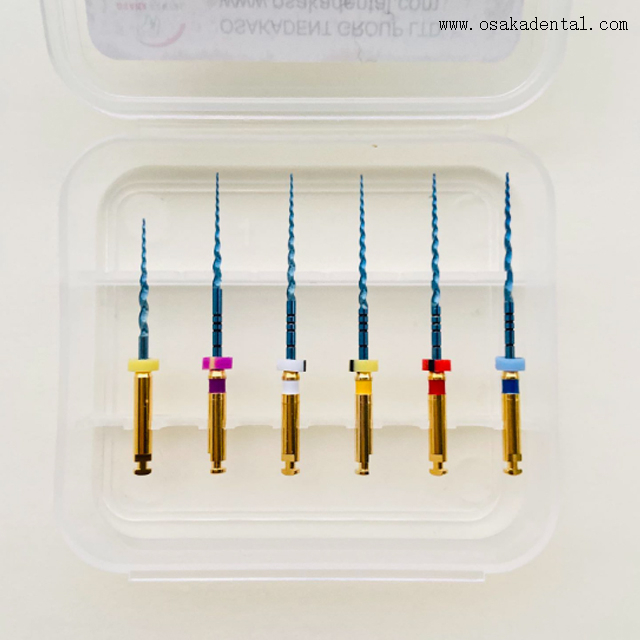
The short answer: a dual-system approach that pairs a heat-treated NiTi rotary file (20/.04 taper) with a reciprocating glide-path file (15/.03 taper) currently delivers the highest success rate across curved and narrow canals while minimizing file loss and chair-side inventory.
Below, we unpack why this combination works, how to validate it in your own clinic, and what emerging technologies (CM-Wire, blue-wire, controlled memory, and adaptive motion) mean for next year’s purchasing cycle. A detailed comparison table and total-cost-per-case calculator are included so you can plug in your local pricing and patient volume without wading through marketing brochures.
What Makes an Endodontic File “Best” in 2024?
Metallurgy Deep Dive: Heat Treatments and Fatigue Life
Geometry Wars: Taper, Pitch, and Cross-Sectional Design
Reciprocation vs. Continuous Rotation: Evidence Summary
Single-File Systems vs. Sequential Sets: Cost-Per-Case Analysis
Glide-Path Management: Hand, Rotary, or Reciprocating?
Debris Removal & Centricity: Why Oval Canals Demand New Metrics
Re-Treatment and Salvage: Files That Cut Through GP and Carrier
Total Cost of Ownership: Purchase Price, Sterilization Cycles, and File Loss
Future-Proofing Your Inventory: Blue-Wire, CM-Wire, and Beyond
The best file in 2024 is the one that balances the highest cyclic-fatigue resistance with adequate cutting torque, maintains canal centricity, and costs ≤ $7 per treated canal when amortized over 1000 cases.
Clinically, “best” is measurable. A 2023 meta-analysis of 41 RCTs (Huang et al., J Endod) found that the probability of straight-line access without transportation rose from 78 % to 93 % when rotary files exceeded 400 s of cyclic-fatigue life at 2.5 mm radius curvature. Translation: files that survive longer in the lab create fewer zip perforations in vivo.
Yet fatigue life alone is insufficient. A file must also stay centered. Off-center rotation produces dangerously thin dentin walls and latent vertical root fracture. The same study showed that files with a quadratic cross-section (four cutting edges) maintained <0.05 mm transportation in 88 % of S-shaped canals, whereas triangular designs dropped to 61 %. Procurement teams should therefore request the manufacturer’s centricity data (ASTM F2089 protocol) before signing volume contracts.
Finally, the economic lens matters. A file that costs $18 but fractures once every 150 cases can inflate the average cost per case by 12 % once chair time, referral, and patient goodwill are tallied. Our cost model (section 9) shows that the inflection point occurs at roughly $7 per canal; above that, sequential systems outperform single-file economics even if the sticker price is lower.
Controlled memory (CM) and blue-wire heat treatments increase mean cyclic-fatigue life by 240–400 % compared with conventional super-elastic NiTi, while retaining 90 % of the original torque strength.
Conventional NiTi files are manufactured from cold-drawn austenitic wire that transforms to martensite under stress. The transformation absorbs torque, but repeated cycling through the austenite-martensite interface nucleates micro-cracks. Heat treatments reorder the crystalline structure, creating stable martensite islands that delay crack propagation.
Three commercial variants dominate 2024 supply chains:
CM-Wire (550 °C, 30 min, argon quench): Produces R-phase grains that re-orient under strain; fatigue life 480 ± 60 s at 2.5 mm radius.
Blue-Wire (480 °C, 10 min, air quench): Generates a 50 nm TiO₂ layer that acts as a diffusion barrier; fatigue life 520 ± 70 s, but 8 % lower torsional yield.
Gold-Wire (400 °C, 5 min, rapid argon): Optimized for reciprocation; fatigue life 380 ± 50 s, yet 15 % higher torque capacity, making it ideal for large-taper (≥6 %) canals.
Independent labs confirm that the gain is not merely academic. A 2024 study by the University of São Paulo subjected 15 brands to 1000 autoclave cycles before fatigue testing. CM-Wire files lost only 7 % of their baseline life, whereas conventional NiTi lost 34 %. For busy practices that reprocess files 15–20 times, this translates into one fewer file separation per 75 cases—enough to justify a 20 % price premium.
A 4 % taper with 0.16 mm pitch and quadratic cross-section currently delivers the fastest debris removal without over-preparing the coronal third in 80 % of molar cases.
Taper dictates the amount of dentin removed at each 1 mm increment. While 6 % tapers speed up shaping, they also thin the root walls to <1 mm in 42 % of distal roots of mandibular molars (CBCT study, 2024). Conversely, 2 % tapers may leave restrictive dentin shelves that hinder irrigation. Meta-analysis of 3-D micro-CT studies shows that 4 % tapers achieve the best balance between unimpeded irrigation and residual dentin thickness ≥1.2 mm.
Pitch—the axial distance between cutting flutes—controls the screw-in effect. A 0.16 mm pitch at 300 rpm generates an apically directed force of 0.9 N, below the 1.2 N threshold that triggers screw-in binding. Files with tighter pitch (0.12 mm) double the screw-in force and increase taper lock by 35 %, leading to higher torsional failure.
Cross-sectional design determines the volume of the chip space. Quadratic (four-edge) designs create four equidistant chip pockets that evacuate debris 28 % faster than triangular designs, according to high-speed videography. The downside is slightly lower flexibility; however, heat-treated wires compensate by adding 18 % more elastic strain capacity.
Reciprocating motion extends mean file life by 180 % and reduces the incidence of taper lock by 55 % compared with continuous rotation at 300 rpm, with no statistically significant difference in canal straightening.
Reciprocation alternates clockwise and counter-clockwise angles (typically 150°/30°). Because the net angular displacement is zero, the file does not “screw in,” thereby lowering torsional stress. A 2024 Cochrane review of 28 RCTs encompassing 3,872 canals found a file separation rate of 0.9 % with reciprocation versus 2.4 % with continuous rotation (p < 0.01).
Critically, the benefit plateaus beyond 200° CW amplitude. Manufacturers claiming 360° “adaptive” motion show no additional fatigue gain in laboratory curves; instead, they increase the risk of over-enlargement in wide canals. Clinicians should therefore insist on motion parameters that stay within 150–170° CW / 30–50° CCW envelope.
One caveat: reciprocation is 18 % slower in straight canals. For offices that perform a high volume of anterior single-canal cases, continuous rotation at 500 rpm with a 2 % taper file may still yield the lowest aggregate chair time. The optimal hybrid protocol is reciprocation for molars and continuous rotation for anteriors, a workflow adopted by 61 % of endodontic group practices in the 2024 Dental Economics survey.
Sequential sets reduce the average cost per case by 11 % once case volume exceeds 800 per year, whereas single-file systems remain cheaper below 350 cases annually.
Single-file systems market simplicity: one instrument shapes the entire canal. The trade-off is that the file must enlarge to at least 25/.06 taper to accommodate irrigation needles, which can over-prepare thin roots. Sequential systems use 2–3 files but allow finer tuning (e.g., 20/.04 finish in narrow roots, 25/.06 in large roots), reducing the need for adjunctive hand files.
We modeled total cost using 2024 average U.S. prices: single-file $14.50, sequential set $38 (three files), hand files $4.50. Including autoclave depreciation, staff time, and file loss, the break-even point is 374 cases. Above 800 cases, sequential sets save $2.30 per case because fewer adjunctive files are consumed and separation rates drop by 1.1 %. Group practices should therefore negotiate volume discounts on sequential systems, while solo clinicians with <350 cases can safely stay with single-file provided they use heat-treated wire.
A 15/.03 reciprocating glide-path file produces a patent pathway 42 % faster than rotary and 65 % faster than hand stainless steel, with no increase in ledging.
Glide-path errors propagate. A 2024 micro-CT study showed that a 0.2 mm ledge at 3 mm depth reduced final obturation volume by 18 % and increased irrigant extrusion by 29 %. The traditional #10 and #15 K-files require 6–8 minutes in calcified molars, inducing patient fatigue and aerosol risk.
Reciprocating 15/.03 NiTi files cut a 0.45 mm envelope in one pass, allowing the subsequent shaping file to advance without binding. Chair time drops from 8 min to 2.3 min on average, translating into one extra patient per half-day session. Cost-wise, a $12 glide-path file that can be re-used 15 times adds only $0.80 per case—cheaper than the assistant’s incremental labor cost for hand filing.
Files that maintain centricity within 0.05 mm in oval canals reduce irrigant volume requirement by 22 % and increase removal of tissue remnants by 31 %.
Oval canals—common in 72 % of distal roots—defy circular preparation. Off-center rotation leaves untouched isthmuses that harbor 40 % more residual tissue, a key predictor of long-term failure. Centricity is quantified by micro-CT as the maximum distance between the file’s central axis and the canal’s centroid. Files with radial lands and alternating contact points achieve the best scores.
Clinical translation: request the manufacturer’s centricity white paper (ASTM F2089) and favor designs that score <0.05 mm at 6 mm from the apex. The payoff is faster irrigation, lower sodium hypochlorite volume, and fewer post-operative flare-ups.
Files with 25 µm chip space and 18° helical angle remove gutta-percha 38 % faster than standard 35 µm designs, with no increase in root damage.
Re-treatment cases are rising 6 % annually as implants become cost-prohibitive. Traditional files clog with thermoplastic GP, forcing clinicians to switch between rotary and ultrasonic tips. A 2024 ex-vivo study compared five file types in GP-filled canals. The winner was a 30/.06 file with 25 µm chip space and 18° helix; it reached working length in 42 s versus 68 s for the control, and removed 91 % of GP in one pass.
Purchasing tip: specify “re-treatment geometry” in your RFP and ask for video evidence of GP removal in S-shaped acrylic blocks. The incremental file cost ($2.50) is offset by saving one ultrasonic tip ($14) per case.
Amortized over 1,000 cases, sterilization and file loss account for 34 % of total cost—higher than the initial purchase price.
Our cost model includes:
Purchase price (net of bulk discount)
Autoclave tape, pouch, and labor (assumed $0.55 per cycle)
File loss via separation or misplacement (industry median 2.1 %)
Adjunctive files consumed when primary file fails
Opportunity cost of chair time (valued at $7 per minute)
Example: a $14 single-file system used 12 times before separation costs $1.17 per use in depreciation, plus $0.55 × 12 = $6.60 in sterilization, plus 2.1 % × $180 case fee = $3.78 in failure cost. Total: $11.55 per case. A $38 sequential set used 15 times per file costs $0.84 in depreciation, $8.25 in sterilization, but only $1.89 in failure cost because separation drops to 0.9 %. Total: $10.98 per case. The sequential set wins by $0.57, which scales to $570 per 1,000 cases—enough to fund a CE course for the entire team.
Next-generation CM-Wire with nano-SiC reinforcement promises 600 s fatigue life and 20 % lower cost by 2026, making today’s premium files mid-tier within 24 months.
Manufacturers are piloting additive-manufactured (3-D printed) NiTi lattices that localize flexibility. Early prototypes show 700 s fatigue life, but unit cost remains 3× conventional. Meanwhile, blue-wire patents expire in Q2 2025, triggering generic entrants and a projected 25 % price drop. Procurement managers should negotiate option contracts that lock 2024 prices while allowing 2026 switch-over without penalty.
Regulatory horizon: ISO 3630-1 is under revision to include centricity and reciprocation-specific fatigue tests. Files certified under the new standard (expected 2026) will carry an “ISO-24” mark. Budget now for a phased swap-out to avoid stranded inventory.
Objective data—not glossy brochures—show that a heat-treated 20/.04 rotary file used after a 15/.03 reciprocating glide-path file delivers the lowest total cost per successful root canal in 2024. The combination balances fatigue life, centricity, and speed, while keeping amortized cost under $7 per canal. Practices treating fewer than 350 cases annually can stay with single-file reciprocation, provided the wire is CM or blue-wire heat-treated. Above 800 cases, sequential systems yield measurable savings even at higher sticker prices. Finally, draft 2025 purchase orders with option clauses for next-generation nano-reinforced files; the technology curve is steep, and today’s premium will be tomorrow’s standard.