 English

Views: 0 Author: Site Editor Publish Time: 2026-03-31 Origin: Site


Have you ever wondered how dental tools can make or break a treatment? Dental endodontic files play a crucial role in successful root canal procedures. In this article, we’ll explore the importance of these files, particularly nickel-titanium (NiTi) variants, and how heat treatment enhances their performance.
Heat treatment refers to a controlled process of heating and cooling materials to alter their physical and sometimes chemical properties. In the context of dental endodontic files, specifically those made from nickel-titanium (NiTi) alloys, heat treatment is crucial for enhancing their performance. By manipulating the crystalline structure of the alloy, heat treatment can significantly improve the flexibility, strength, and fatigue resistance of the files, making them better suited for the complexities of root canal procedures.
Heat treatment affects NiTi alloys by inducing phase transformations between austenite, martensite, and R-phase. These transformations are temperature-dependent and influence the mechanical properties of the files. For example, when NiTi files are heat-treated, their phase composition shifts, often increasing the proportion of martensite at body temperature. This martensitic phase is more flexible, allowing the files to navigate curved canals more effectively. Additionally, the heat treatment process can relieve internal stresses within the alloy, reducing brittleness and enhancing ductility.
| Aspect | Heat-Treated NiTi Files | Non-Heat-Treated NiTi Files |
|---|---|---|
| Flexibility | Higher flexibility | Lower flexibility |
| Cyclic Fatigue Resistance | Better resistance to repeated stress | More prone to fatigue failure |
| Performance in Curved Canals | Adapts more easily to canal curvature | Less adaptable in complex anatomy |
| Internal Stress | Reduced through treatment process | Higher residual stress |
| Fracture Risk | Lower risk during clinical use | Higher risk under demanding conditions |
Heat-treated NiTi files exhibit distinct advantages over their non-heat-treated counterparts. For instance, heat-treated files tend to have a higher resistance to cyclic fatigue, which is critical in preventing fractures during use. In contrast, non-heat-treated files may be more rigid and prone to breakage under the stresses encountered in complex canal systems. Studies have shown that heat-treated files can maintain their integrity and performance better during procedures, leading to improved clinical outcomes. A notable example includes the ProTaper Gold system, which has demonstrated superior flexibility and fatigue resistance compared to traditional NiTi files.
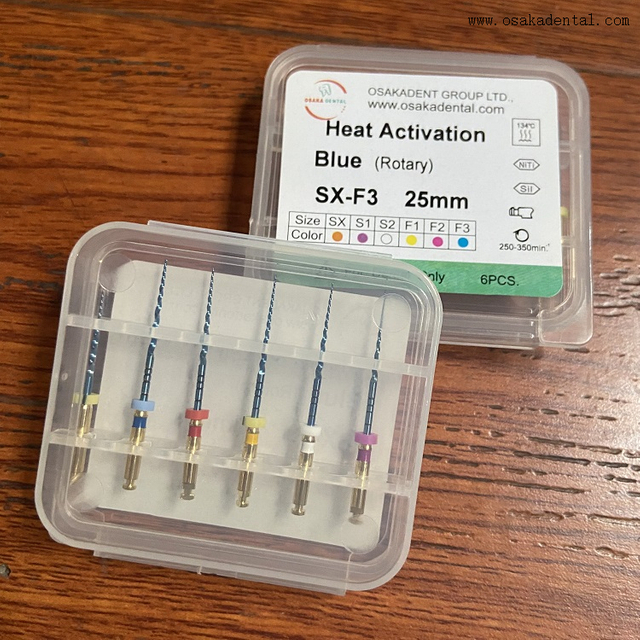
Heat-treated nickel-titanium (NiTi) endodontic files are designed to offer superior flexibility and durability compared to traditional files. The heat treatment process alters the crystalline structure of the NiTi alloy, allowing the files to maintain their shape while navigating the complex anatomy of root canals. This enhanced flexibility is crucial when dealing with curved or intricate canal systems, as it minimizes the risk of ledging or breaking during procedures.
For example, heat-treated files such as ProTaper Gold and One Curve exhibit remarkable flexibility, enabling them to adapt to the natural curvature of root canals. This flexibility not only helps in preserving the original canal shape but also reduces the likelihood of procedural errors, ultimately leading to better clinical outcomes.
One of the most significant advantages of heat-treated NiTi files is their improved resistance to fractures and cyclic fatigue. The heat treatment process increases the proportion of martensite, a phase known for its superior flexibility and fatigue resistance. In contrast, non-heat-treated files tend to be more rigid and susceptible to breakage under stress.
Research indicates that heat-treated files can withstand more cycles of bending and torsional stress before failing. For instance, Controlled Memory (CM) files are reported to have a cyclic fatigue resistance that is significantly higher than conventional NiTi files. This means that practitioners can use heat-treated files with greater confidence, knowing they are less likely to fracture during complex procedures.
The clinical implications of using heat-treated NiTi files are profound, especially in challenging cases. Their enhanced flexibility allows for better navigation through curved canals, which is often a significant hurdle in endodontic treatments. For example, when treating molars with multiple canals, the ability of heat-treated files to adapt to the canal's natural curvature can lead to more effective cleaning and shaping.
Moreover, heat-treated files often exhibit visible deformation before breaking, providing clinicians with a warning sign. This feature enhances safety during procedures, as it allows for timely intervention before complete failure occurs.
In summary, heat-treated dental endodontic files offer substantial benefits, including enhanced flexibility, improved resistance to fractures, and clinical advantages in navigating complex canal systems. These features make them an invaluable tool in modern endodontics, contributing to safer and more effective treatments.
Nickel-titanium (NiTi) alloys used in dental endodontic files showcase unique phase transformations that significantly influence their mechanical properties. The three primary phases are austenite, martensite, and R-phase.
Austenite is the high-temperature phase, exhibiting a body-centered cubic structure. It is characterized by its rigidity and high strength, making it less flexible.
Martensite is stable at lower temperatures, displaying a monoclinic structure. This phase is much more flexible, allowing the files to bend and navigate through curved canals without breaking.
R-phase is an intermediate phase that occurs during the transformation between austenite and martensite. It provides a balance between flexibility and stability, enhancing the instrument's performance in clinical applications.
The ability of NiTi files to transition between these phases is temperature-dependent. This means that at body temperature, a higher proportion of martensite is present, which is beneficial for flexibility during procedures.
The phase composition of NiTi files directly affects their performance in clinical settings. For instance, files predominantly in the martensitic phase at body temperature exhibit superior flexibility, allowing for better adaptation to the natural curvature of root canals. This flexibility reduces the risk of file separation, which is a common complication in endodontic treatments.
Research indicates that files treated to enhance their martensitic content at body temperature can withstand higher bending loads and resist cyclic fatigue more effectively than those that do not undergo such heat treatments. For example, Controlled Memory (CM) files maintain their martensitic properties at body temperature, improving their performance in complex canal anatomies.
The transformation temperatures of NiTi files are critical to their functionality. The key temperature points are:
Martensitic Start (Ms): The temperature at which the material begins to transform from austenite to martensite.
Martensitic Finish (Mf): The temperature at which the transformation to martensite is complete.
Austenite Start (As): The temperature at which martensite starts to revert to austenite.
Austenite Finish (Af): The temperature at which the transformation to austenite is fully realized.
R-phase Start (Rs) and R-phase Finish (Rf): These temperatures indicate the transformation points for the R-phase.
Understanding these temperatures allows manufacturers to optimize the heat treatment processes for NiTi files, ensuring that they perform effectively under clinical conditions. For instance, instruments like the HyFlex EDM have been shown to exhibit a favorable balance of martensitic and austenitic phases, enhancing their flexibility and cyclic fatigue resistance.
In summary, the phase transformations of NiTi alloys are crucial for the performance of dental endodontic files. By manipulating the phase composition through heat treatment, manufacturers can produce files that are not only flexible but also capable of enduring the stresses encountered during clinical procedures.
The mechanical properties of dental endodontic files, particularly those made from nickel-titanium (NiTi) alloys, are crucial for their performance in clinical settings. Two key mechanical properties that significantly influence their effectiveness are bending properties and cyclic fatigue resistance.
Bending Properties
The bending properties of NiTi endodontic files determine how well they can navigate the complex anatomy of root canals without breaking. Bending tests typically assess the load required to bend the file to a certain degree. Heat-treated NiTi files, such as those produced using advanced thermal techniques, exhibit enhanced flexibility. This flexibility is essential for adapting to the natural curves of root canals, which can vary significantly in shape and size.
For instance, files like the HyFlex EDM and ProTaper Gold have been shown to maintain their structural integrity even under significant bending stress. This characteristic minimizes the risk of ledging or breaking during procedures, which can lead to complications and increased treatment time. The heat treatment process optimizes the phase composition of the alloy, allowing for a higher proportion of martensite at body temperature, which contributes to increased flexibility.
Cyclic Fatigue Resistance
Cyclic fatigue resistance refers to the file's ability to withstand repeated bending and torsional stresses during use. This property is vital, as endodontic files often encounter significant mechanical stress while navigating curved canals. Heat-treated NiTi files generally exhibit superior cyclic fatigue resistance compared to non-heat-treated options. For example, studies have demonstrated that heat-treated files can endure significantly more cycles before failure, reducing the likelihood of instrument separation during treatment.
Research indicates that files like the Controlled Memory (CM) and ProTaper Gold can resist cyclic fatigue much better than conventional NiTi files. The increased fatigue resistance is attributed to the optimal phase transformation temperatures achieved through heat treatment. These files tend to exhibit a more gradual deformation before breaking, providing clinicians with visual cues to prevent instrument failure.
The geometry of NiTi files also plays a crucial role in their mechanical performance. Factors such as cross-sectional shape, core diameter, and taper influence the files' bending and fatigue resistance. For example, files with a smaller core diameter often exhibit greater flexibility, allowing them to navigate through complex canal systems more effectively.
The cross-sectional shape also affects the cutting efficiency and the ability of the file to maintain the original canal path during instrumentation. Instruments designed with a triangular or convex cross-section can provide better centering ability, minimizing the risk of canal transportation.
To evaluate the mechanical properties of NiTi endodontic files, several testing methods are employed. Bending tests measure the load required to bend the file to specific angles, while cyclic fatigue tests assess how many cycles the file can endure before fracturing. These tests are typically conducted in controlled environments that simulate clinical conditions, providing valuable insights into the files' performance.
In summary, the mechanical properties of NiTi dental endodontic files, including bending properties and cyclic fatigue resistance, are critical for their performance in clinical practice. Heat treatment enhances these properties, making modern NiTi files more effective and reliable in navigating the complexities of root canal systems.
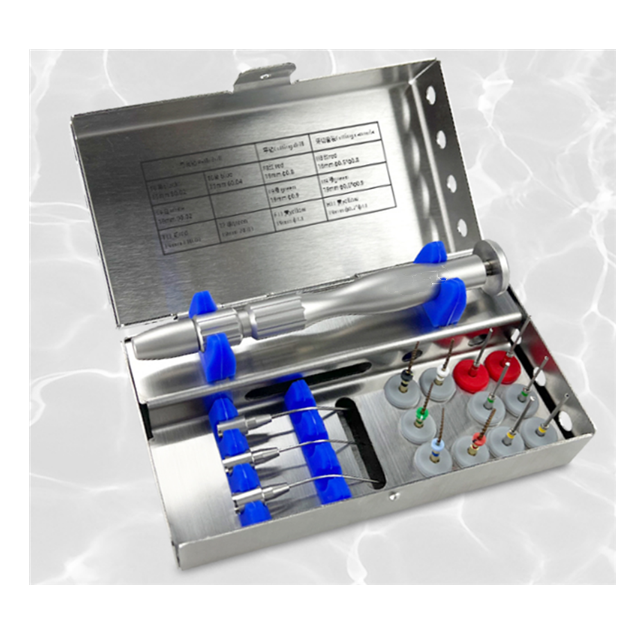
Heat-treated nickel-titanium (NiTi) endodontic files have become indispensable tools in modern dentistry, especially for navigating the intricate anatomy of curved and complex root canals. Their enhanced flexibility allows them to adapt to the natural curvature of the canals, minimizing the risk of procedural errors such as ledging, zipping, or canal transportation. For instance, systems like ProTaper Gold and One Curve are specifically designed to maintain the canal's original shape while effectively cleaning and shaping the canal space. This adaptability is crucial, as traditional stainless steel files may not provide the same level of performance in complex cases, often leading to increased procedural complications.
The ability to pre-bend heat-treated NiTi files before insertion also significantly improves their usability in challenging cases, such as when treating molars with multiple canals. This pre-bending feature allows clinicians to navigate through tight spaces more easily, enhancing overall treatment efficiency and success rates. The flexibility of heat-treated files helps preserve more dentin, which is vital for maintaining tooth structure and ensuring long-term tooth survival.
One of the standout safety features of heat-treated NiTi files is their tendency to visibly deform before fracturing. This characteristic provides clinicians with a crucial warning signal, allowing for timely intervention before complete failure occurs. For example, Controlled Memory (CM) files exhibit a marked visual change when subjected to excessive stress, alerting the practitioner to adjust their technique or replace the instrument.
Additionally, heat-treated files demonstrate superior cyclic fatigue resistance compared to their non-heat-treated counterparts. This resistance is essential, as endodontic instruments often experience significant mechanical stress during procedures. Heat-treated files, such as the HyFlex EDM and ProTaper Gold, have been shown to withstand more cycles of bending and torsional stress, thereby reducing the likelihood of instrument separation within the canal. This added durability contributes to safer and more predictable treatment outcomes.
Numerous clinical studies have highlighted the effectiveness of heat-treated NiTi files in various endodontic procedures. For instance, a study published in BMC Oral Health demonstrated that heat-treated files like HyFlex CM and ProTaper Gold exhibited superior performance in terms of flexibility and fracture resistance when used in curved canals. The results indicated that these instruments maintained their structural integrity better than traditional stainless steel files, leading to improved clinical outcomes.
Another notable case involved the use of One Curve files in a patient with a severely curved canal. The clinician reported successful navigation through the canal without any procedural complications, attributing the success to the flexibility and durability of the heat-treated file. Such cases reinforce the notion that heat-treated NiTi files are not only effective but also essential for achieving optimal results in complex endodontic treatments.
In summary, the application of heat-treated NiTi endodontic files in clinical practice has revolutionized the field of endodontics. Their flexibility, safety features, and proven efficacy in navigating complex canal systems make them invaluable tools for modern dental practitioners.
Heat treatment significantly enhances the performance of nickel-titanium (NiTi) dental endodontic files. It improves flexibility, durability, and resistance to fractures and cyclic fatigue. This is crucial for navigating complex canal systems effectively. The evolution of endodontic instruments continues, with advancements in design and materials. Ongoing research will further refine these tools, improving patient outcomes. Osakadent offers high-quality heat-treated NiTi endodontic files, providing exceptional value for dental practitioners seeking reliable and effective solutions in endodontics.
A: Dental endodontic files are instruments used in root canal procedures to clean and shape the canals, particularly those made from nickel-titanium (NiTi) alloys.
A: Heat treatment enhances the flexibility, strength, and fatigue resistance of dental endodontic files, making them better suited for navigating complex root canal anatomies.
A: Heat-treated dental endodontic files offer improved resistance to fractures and cyclic fatigue, leading to safer and more effective endodontic treatments.
A: While heat-treated dental endodontic files may cost more than non-treated options, their benefits in performance and safety often justify the investment.
A: Heat-treated dental endodontic files provide superior flexibility and resistance to breakage compared to traditional stainless steel files, enhancing clinical outcomes.


